
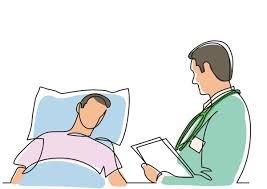
If you are totally fluent in speaking English, and someone were to ask you, “Do you speak English?” how would you react?
Appreciative?
Offended?
Not even think about it?
Or say, ‘it depends on the context’?
So here is the context.
Sumita’s father had been hospitalized and was in the ICU. Sumita, a senior executive at JP Morgan, was born and raised in the US, but her parents had migrated from India over 50 years ago. Her mother, a pediatrician, retired after serving as the Chairperson of the Department of Pediatrics at a major teaching hospital. Her father, also retired, was an attorney and head of his law firm, specializing in immigration law. Now living in Atlanta, Georgia, they spent their retirement years travelling across the globe.
I formed a chat group with a few close friends, and we were in regular contact with Sumita, inquiring about her father’s progress. In one of the chats, after assuring us that her Dad was recovering well, Sumita shared her dilemma, and then, of course, everyone on the chat group chimed in. By the way, everyone in the group chat was either a doctor or a lawyer, except for me.
Sumita: There has been this weird - culturally sensitive? Thing. Most of the doctors ask us if we speak English. Because we speak Punjabi with each other, and my dad has been suffering from some delirium, so we have been language-mixing a lot. Do you doctors do that as a matter of course? I couldn’t decide if I liked it or felt offended by it.
Me: It’s the South.
[Of course, I am not prejudiced.]
Young Female Doctor: I would be offended. It’s a Southern thing, I guess. But I’m sure your dad mixing language is part of it.
Young Male Doctor: Good question. Yesterday I got to see a hospital patient in his bed. We exchanged a few brief greetings in English, then I gave him this extensive update in English. Then, at the very end, I find out that it’s not his primary language.
Would have helped if I had asked him if he would prefer that I speak in English.
I can see how some people would be offended to be asked if they spoke English. Other people are relieved when they get asked, so it now gives them an option to get a translator rather than struggle.
It takes some experience and smooth intuition to know how to best ask or find out without offending the other person.
But if I walked into a room where the patient and family were all speaking another language, I might be inclined to start off in English briefly, and then politely confirm if that is their preferred language in case I sense that it might not be.
Lawyer: If you all were talking in Punjabi, I think it is practical and considerate for a caregiver to make sure that you are in a position to understand what they are about to tell you.
Sumita: Yeah, maybe the phrasing was the issue. “Is English your preferred language?” vs. “Do you speak English?”
I haven’t spent too much time thinking about this, but we had at least two Indian/Pakistani doctors, and they were very comfortable to interact with. And they didn’t ask us about language at all.
Lawyer: Well, that’s interesting and telling.
Young Male Doctor: Sometimes I am so rushed on morning rounds that it is very easy to blurt out something that isn’t as tactful.
Retired Male Doctor: This is a teaching moment. Healthcare providers need to learn better communication skills. If I am not wrong, the electronic medical records, and before that, the paper records, included the patient’s preferred language. Upon admission, you asked a bunch of questions, and one of them was your preferred language. Nonetheless, we tend to assume many things that we should not.
Young Female Doctor: Language preference and need for translation are in the Epic Electronic Medical Record in the top left corner, where it is easily visible to clinicians.
I think, as Sumita mentioned, with her dad having some delirium and language mixing, they may have wanted to confirm he speaks English and to possibly rule out a language barrier?
---------
A week later, after Sumita’s dad had been discharged from the hospital, I reached out to Sumita and her mom. As we talked about this ‘Do you speak English’ business, Sumita shared some afterthoughts, as did her mom, and the Retired Male Doctor.
Sumita: I have been pondering why I didn’t say to the doctor, “I speak three languages.”
Me: English, Spanish, and Punjabi.
Sumita: I believe there is a huge power dynamic between doctors, and patients and their families, especially in an emergency. So, from the patient’s perspective, it’s not the right time to correct the doctor, lest one appear to be rude.
Retired Male Doctor: It is a power dynamic, particularly with the doctor standing and towering over the patient lying in bed. It is intimidating to the patient, and they are afraid to challenge the doctor or even question him or her. Doctors who are sensitive to this will take a seat next to the patient so that they are at eye level. That positioning alone, relaxes the patient.
Sumita’s mom: I think that hearing twice, “Does your dad speak English?” affected Sumita more than me. I took it as a question and answered: “Yes, he does.” I did not see any hidden meaning. Here in Atlanta, there is a large percentage of Hispanics, some of whom have limited English-speaking ability, and they look very much like South Asians.
Me: I see . . . but . . . . hmmm!
***************
Readers, have you ever been in this situation?
And I mean not only as a patient, a patient’s loved one, but also as a doctor?
What do you think?
*****************************************


